

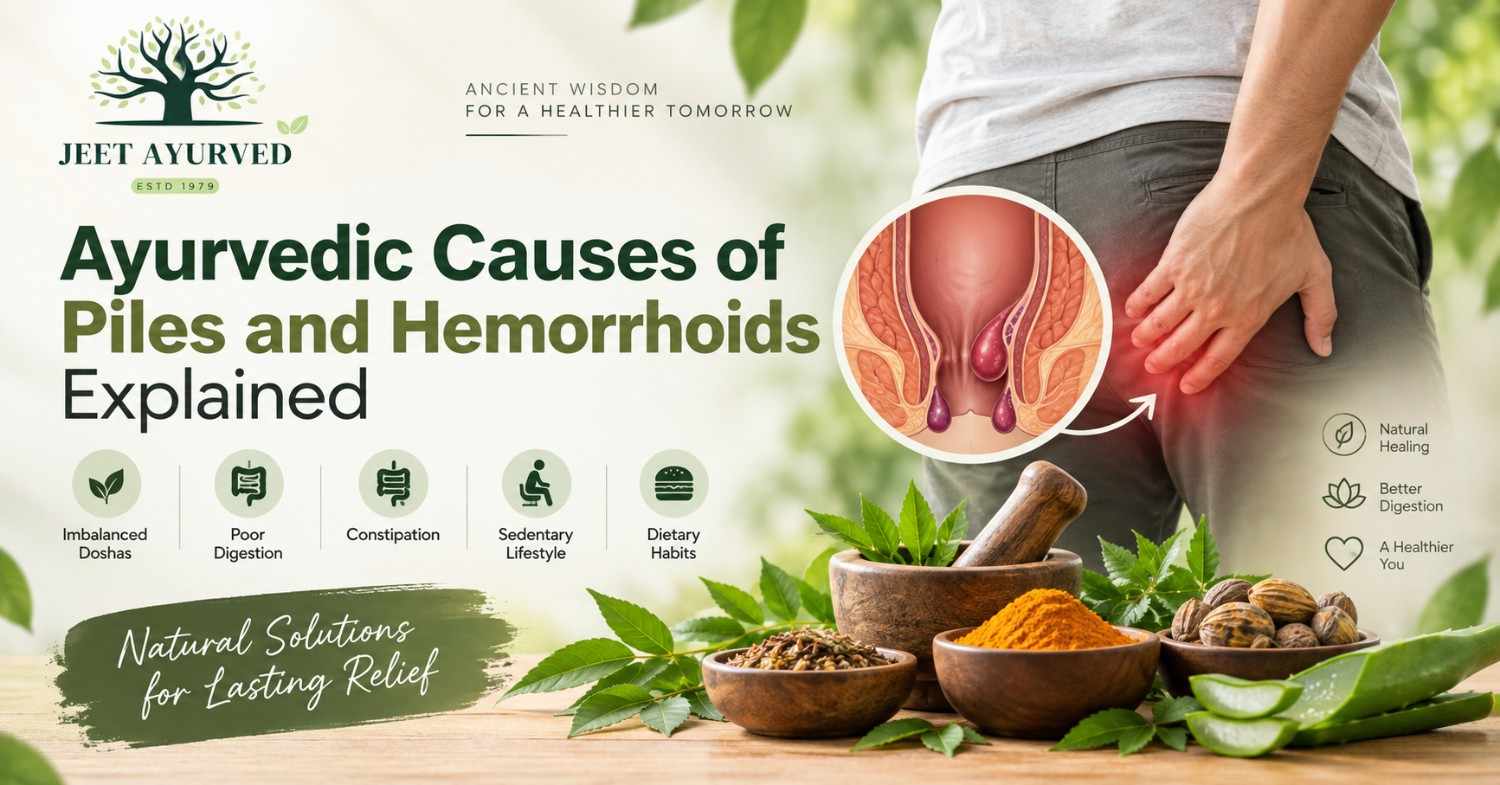
Piles are one of those conditions people often deal with quietly, assuming it’s just something that happens with age or a bit of bad luck. Ayurveda takes a more specific view-it sees piles as the downstream result of a fairly predictable chain of digestive and lifestyle factors, most of which are within your control. Here’s how Ayurveda explains why piles develop, and what that explanation points toward.
In Ayurveda, piles are referred to as Arsha, and they’re understood as a condition rooted in dosha imbalance-primarily Vata and Pitta, sometimes with Kapha involved as well. Rather than treating piles as an isolated local problem with the rectal veins, Ayurveda traces the issue back through digestion, diet, and daily habits.
This matters because it reframes the goal: instead of only managing the symptom, Ayurveda’s approach is aimed at correcting the underlying pattern that led to the piles forming in the first place.
Across nearly every Ayurvedic source on this topic, one factor comes up more than any other: chronic constipation and straining during bowel movements. When Vata is aggravated-often from dry, cold, or irregular eating, or a sedentary lifestyle-stools become harder and drier, requiring more strain to pass. That repeated straining increases pressure on the rectal veins, which is considered a direct mechanical trigger for piles to develop.
This is closely tied to the same digestive pattern behind Ayurveda’s broader approach to chronic constipation-in fact, addressing constipation is often the single most impactful step in both preventing and managing piles, since it removes the mechanical strain that aggravates them in the first place.
Ayurveda distinguishes between two broad presentations of piles, each linked to a different dosha:
Some cases involve a combination of factors, which Ayurveda considers more complex to address. Recognizing which pattern is present helps determine which dietary and herbal approach is likely to help most.
Beyond constipation itself, Ayurveda identifies specific dietary patterns as contributing factors:
Diet aside, a few lifestyle patterns are repeatedly named as contributing to piles in Ayurvedic sources:
A number of herbs appear consistently in Ayurvedic formulations for piles, generally aimed at reducing inflammation, supporting healthy bowel movements, and toning rectal tissue:
These herbs are typically combined into a single formulation rather than used individually, since Ayurveda treats piles as connected to overall digestive balance rather than an isolated symptom. This is the same principle behind formulations like Piles Relief, which brings several of these traditional herbs together to support digestive comfort and healthy elimination as a whole.
Alongside herbs, Ayurveda recommends specific dietary shifts for anyone dealing with or prone to piles:
Beyond internal herbs and diet, Ayurveda includes a few supportive practices specifically for piles comfort:
These are generally used alongside herbs and dietary changes rather than as a standalone solution, since Ayurveda treats piles as requiring support from multiple angles at once.
Ayurveda encourages attention to early, subtler signs before piles become a more established or painful problem:
Catching these earlier signs and adjusting diet and habits promptly is generally easier than addressing more established, symptomatic piles later on-which is part of why Ayurveda emphasizes prevention through diet and lifestyle as much as active treatment.
It’s important to be direct here: not every case of piles resolves with diet and herbs alone, and some symptoms warrant prompt medical attention rather than home management. According to NIDDK’s overview of hemorrhoids, part of the U.S. National Institutes of Health, doctors can diagnose hemorrhoids through a physical exam and may recommend in-office or outpatient procedures for cases that don’t improve with home care.
If there’s significant, ongoing bleeding, severe pain, a hard painful lump, or any bleeding that isn’t clearly explained, it’s worth seeing a doctor rather than assuming it’s simply piles that will resolve on their own-rectal bleeding can occasionally have other causes that need to be ruled out.
A realistic Ayurvedic approach to managing and preventing piles includes:
If you’re building a routine to support digestive comfort and prevent future flare-ups, you can explore our full range of Ayurvedic remedies to find formulations that support elimination and digestion together.
What does Ayurveda say causes piles?
Ayurveda attributes piles primarily to aggravated Vata and Pitta doshas, most often triggered by chronic constipation, straining during bowel movements, and dietary or lifestyle factors that disrupt digestion.
What’s the difference between dry piles and bleeding piles in Ayurveda?
Dry piles (Shushka Arsha) are linked to Vata and tend to be painful with little bleeding, while bleeding piles (Raktarsha) are linked to Pitta and tend to involve burning and bleeding.
Does fixing constipation actually help with piles?
Yes-since straining during bowel movements is considered the primary mechanical trigger for piles, addressing constipation is often the most impactful step in both prevention and management.
Are Ayurvedic herbs for piles safe to use long-term?
Herbs like Triphala are widely used as part of ongoing digestive routines and aren’t considered habit-forming, though it’s worth checking with a healthcare provider if you have an existing condition or take medication.
When should piles be checked by a doctor instead of managed at home?
Significant or ongoing bleeding, severe pain, a hard painful lump, or bleeding without a clear cause should be evaluated by a doctor rather than assumed to be simple piles.




Welcome Back 👋
Sign in to access your account and continue where you left off.
Welcome Jeet Ayurved🚀
Create your account to access everything you need.