
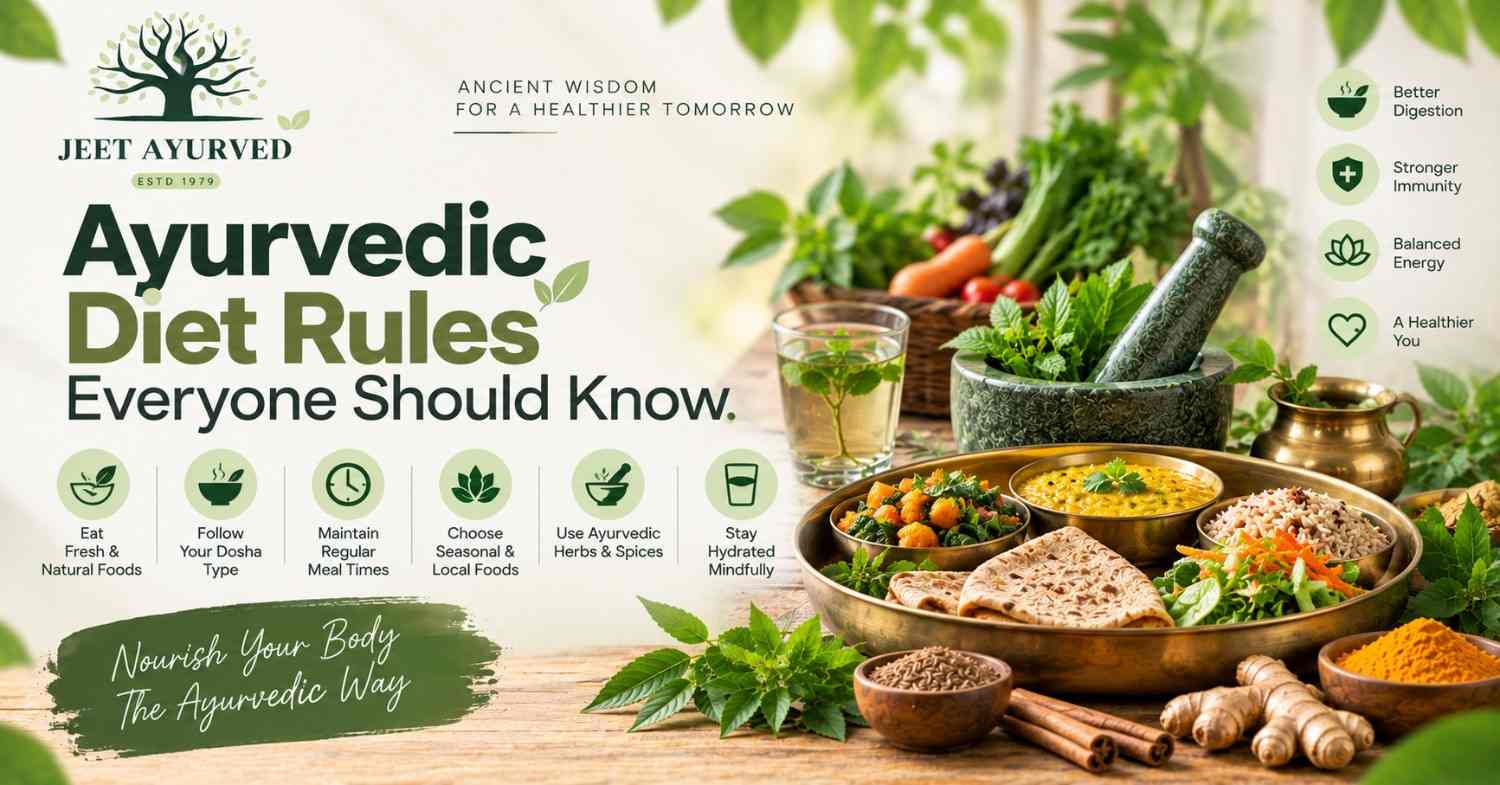
Most people’s first encounter with “Ayurvedic diet” advice is a confusing mix of lists – foods to avoid, foods to favor, strange-sounding combinations to never eat together. What’s usually missing is the logic underneath it. Ayurveda’s dietary guidance isn’t a random set of restrictions; it follows a consistent internal logic built around digestion, taste, and timing. Here’s what that logic actually is.
Diet is one of the most practical, everyday applications of Ayurveda – more relevant day-to-day than herbs or therapies for most people. If you haven’t yet, it’s worth reading our beginner’s guide to what Ayurveda is for the broader framework this fits into. But you don’t need the full picture to start applying diet principles – they stand on their own.
Ayurveda organizes all food into six tastes, and the core idea is that a balanced meal – and a balanced diet overall – includes all six, rather than leaning heavily on just one or two:
Most modern diets lean heavily toward sweet, salty, and sour, with bitter, pungent, and astringent almost absent. Ayurveda treats this imbalance – not any single food – as a major contributor to digestive sluggishness over time.
Nearly every piece of Ayurvedic dietary guidance circles back to the same starting point: a healthy Agni (digestive fire) matters more than any single food choice. Even nutrient-dense, “healthy” food is considered counterproductive if digestion is too weak to properly process it – it just adds to Ama (toxic residue from incomplete digestion) instead of nourishing the body.
This is the same logic that shows up across many other areas of Ayurveda – including how Ayurveda approaches fatty liver, where diet changes are only expected to help once digestion itself is addressed first. It’s a recurring theme: Ayurveda consistently treats digestive strength as the foundation everything else is built on, not a secondary detail.
One of the more distinctive – and often misunderstood – parts of Ayurvedic dietary guidance is Viruddha Ahara, or incompatible food combinations. The idea is that certain foods, while fine individually, create digestive conflict when eaten together, producing Ama even in people with otherwise strong digestion. Commonly cited examples include:
It’s worth being fair about this part: these combining rules are traditional guidance based on observation across centuries, not findings from controlled modern digestion studies. Some overlap loosely with modern food-science concepts (digestion speed mismatches, fermentation interactions), but they shouldn’t be presented as clinically proven. Treat them as traditional practices worth being aware of, not strict medical rules.
Diet guidance in Ayurveda also adjusts based on your dominant constitution. If you’re not sure which applies to you, our breakdown of Vata, Pitta, and Kapha covers how to recognize your own tendencies. In general:
These aren’t rigid rules – they’re a starting point for noticing which foods tend to leave you feeling heavy, energized, or irritated, and adjusting from there.
Ayurveda places real weight on eating patterns, not just food choices:
Many people find these timing habits make a bigger practical difference than any specific food swap – largely because they’re the habits most commonly ignored in a typical modern schedule.
A few patterns show up repeatedly when people try to adopt Ayurvedic eating principles too rigidly or too loosely:
It’s worth being direct: Ayurvedic dietary principles are a traditional system refined over centuries of observation, not a body of knowledge validated through the kind of controlled clinical trials used in modern nutrition science. According to NIH’s overview of Ayurvedic medicine, rigorous research on whole Ayurvedic systems is limited, and results from individual studies vary. That doesn’t make these principles worthless – many people find real, practical value in eating more mindfully, balancing tastes, and paying attention to digestion – but it’s fair to treat this as traditional wisdom rather than clinically proven nutrition science, and to check with a healthcare provider or registered dietitian before making major dietary changes, especially if you have an existing condition.
A realistic way to start applying Ayurvedic diet principles without overhauling everything at once:
If you’re looking for extra digestive support while adjusting your habits, you can explore our full range of Ayurvedic remedies to find a formulation that complements the changes you’re making.
What are the six tastes in Ayurveda?
Sweet, sour, salty, pungent, bitter, and astringent. Ayurveda recommends including all six in your diet for balance, rather than leaning heavily on just one or two.
Is food combining in Ayurveda scientifically proven?
Not through controlled clinical trials – it’s traditional guidance based on centuries of observation. Some principles loosely align with modern food-science concepts, but it’s best treated as traditional practice rather than proven medical fact.
What’s the most important Ayurvedic eating habit to start with?
Many practitioners point to meal timing first – eating your largest meal around midday and avoiding heavy meals late at night – since it’s simple to apply and doesn’t require major food changes.
Do I need to know my dosha to follow Ayurvedic diet principles?
No – the six tastes, food combining awareness, and meal timing apply broadly. Knowing your dosha helps fine-tune specific food choices, but isn’t required to start.
Can Ayurvedic diet principles replace advice from a dietitian?
No – they work best as a complementary framework. If you have a specific health condition or dietary need, a registered dietitian or doctor should guide major changes.




Welcome Back 👋
Sign in to access your account and continue where you left off.
Welcome Jeet Ayurved🚀
Create your account to access everything you need.